Postcards for podiatry practices
Get patients back before the heel pain returns
Most foot problems flare up again — but patients only call when they're hurting, not when it's time for a follow-up. CardCadence mails recall and reactivation postcards that bring them back in, with a QR code to your booking page on every card.
The problem
One-and-done patients are your biggest leak
A patient comes in for plantar fasciitis or an ingrown toenail, gets relief, and disappears — until the pain comes back and they Google someone else. Recall emails sit unread and portal nudges get ignored. A postcard on the kitchen counter reminds them you fixed their feet once and can do it again. With a QR code, you finally know which recall actually filled the chair.
The play
The 'time for your follow-up' recall
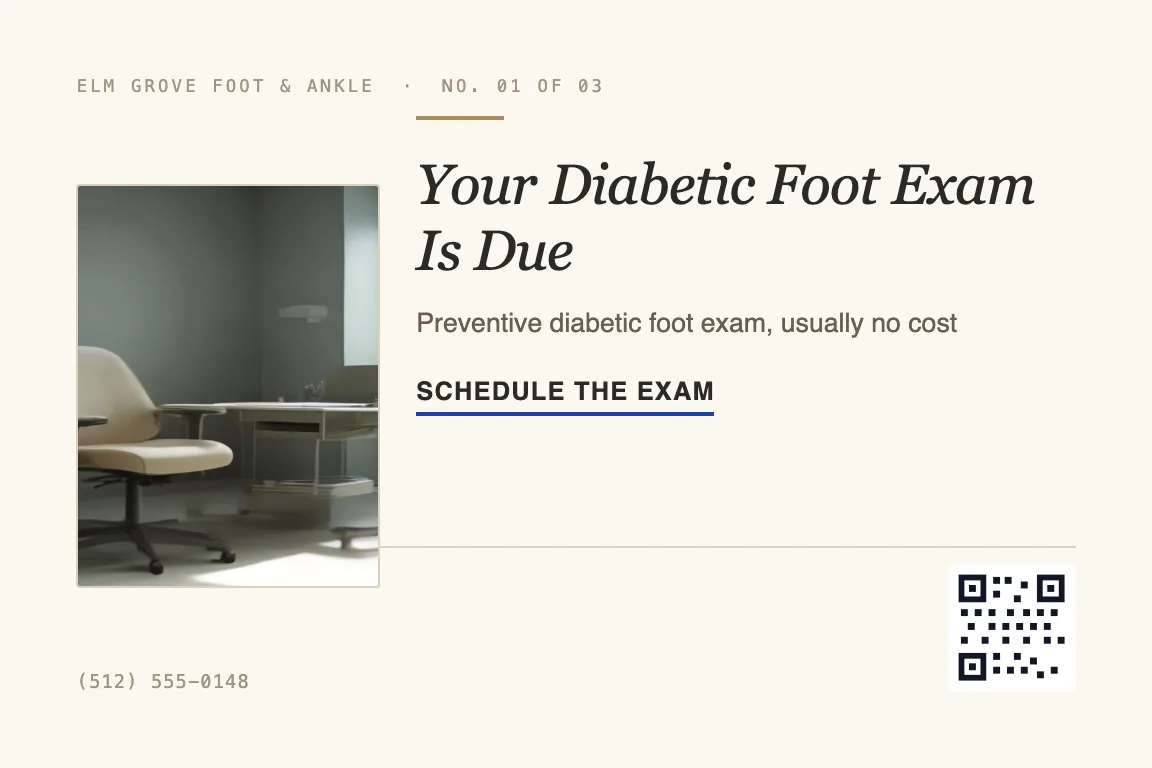
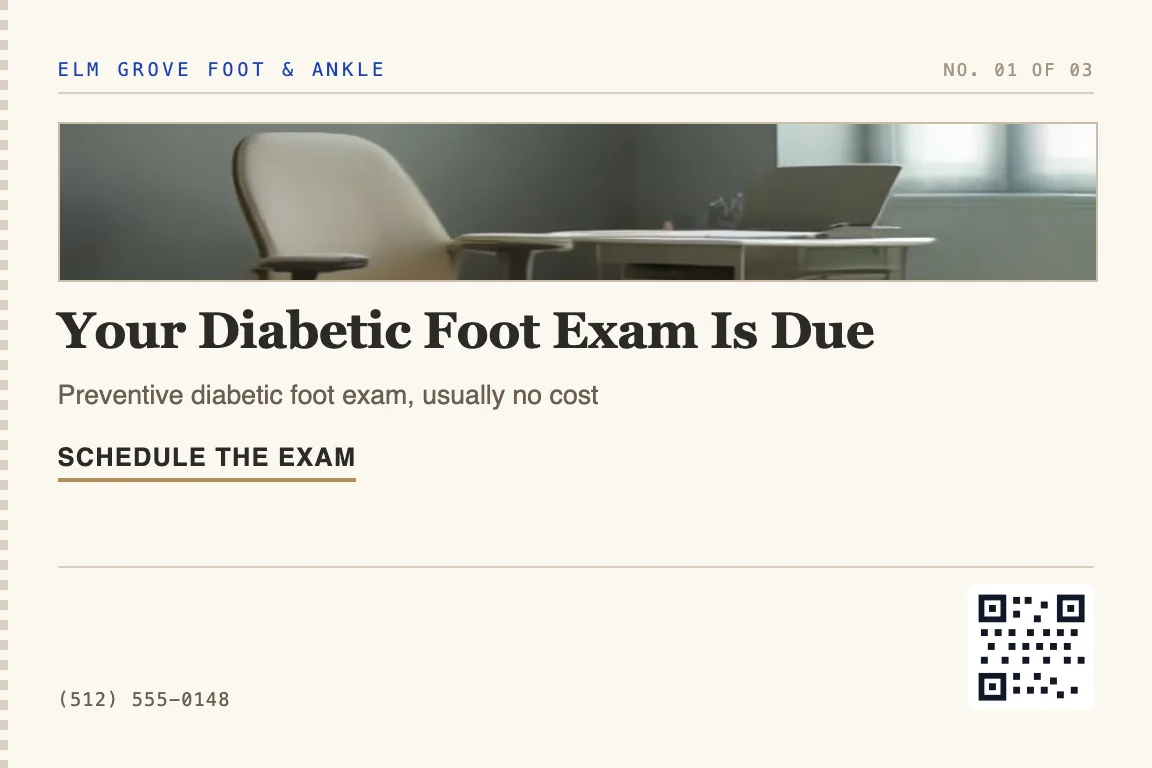
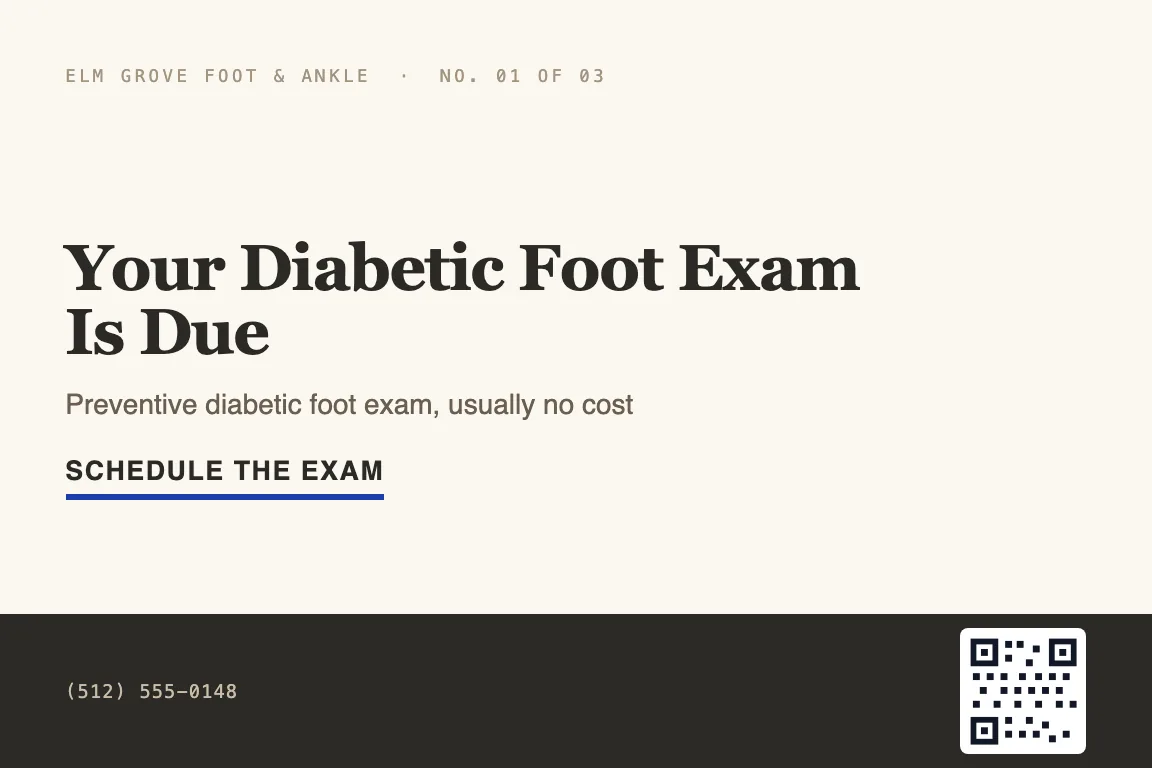
Pull the patients you haven't seen in 6 to 12 months — the diabetic foot checks, the orthotics wearers due for a refit, the runners who never came back. Mail a warm recall with a clear booking prompt and a QR code straight to your scheduler. CardCadence verifies addresses, prints, and mails — you just watch the calendar fill.
- Recall cards for patients overdue for a follow-up or routine foot check
- Diabetic foot-exam reminders to keep at-risk patients on schedule
- Custom-orthotics refit and replacement reminders before they wear out
- New-mover welcome cards to nearby households shopping for a podiatrist
The honest pitch
What you actually get
CardCadence is newly launched, so no dressed-up testimonials — just the facts for your podiatry mailers.
Pay per card, from $1.19
Printing, postage, and mailing in one price. Fund a wallet, pay only for the podiatry cards you send — no subscription, no contract.
Mailed First-Class
Every card goes out at USPS First-Class rates — typically 2–5 days in transit, and the Postal Service forwards it free for 12 months if your customer has moved. There is no slower bulk tier to be quietly downgraded into.
Trackable by default
Every postcard design ships with a QR code that resolves to a link unique to each recipient, so a scan ties back to the exact card and address that earned it. Leave it in place and your podiatry mail is measurable.
Designed for podiatry
Start from one of our postcard layouts, write the copy and offer for your podiatry audience, or upload your own art. Proof it on a real postcard preview before anything mails.
Common questions
Questions about podiatry postcards
What does it cost to mail podiatry postcards?
$1.19 for a 4x6, $1.35 for a 6x9 and $1.69 for a 6x11 — and that is the whole number, not a print price with postage bolted on afterwards. There is no subscription and no contract: you fund a wallet and each card draws down from it, so a 500-piece drop is a figure you can work out before you commit to it.
Who should I mail first?
Patients who never came back after their first visit. Start there rather than with the biggest list you can buy: a narrower drop costs less to test and tells you far more about what works. Build it from your own records or target by area, then proof the card on a real postcard preview before a single one prints.
How do I know the mail actually worked?
Every design carries a QR code that resolves to a link unique to each recipient, so a scan ties back to the exact card and the exact address that earned it — not just to "the campaign". Leave the code where it is and the spend stops being a guess.
Is it safe to mail my patient list?
You are mailing your own patients from your own records, and CardCadence never asks for clinical detail — the merge fields are name and address, not diagnosis or treatment. Keep it that way: a postcard is readable in transit, so anything about a condition or a procedure belongs in an envelope, not on the back of a card. Your compliance contact should sign off on the copy before the first drop; this is a description of how the product works, not legal advice.
Bring your patients back through the door
Fund a wallet, send your first podiatry postcards, and track every scan. No subscription.